


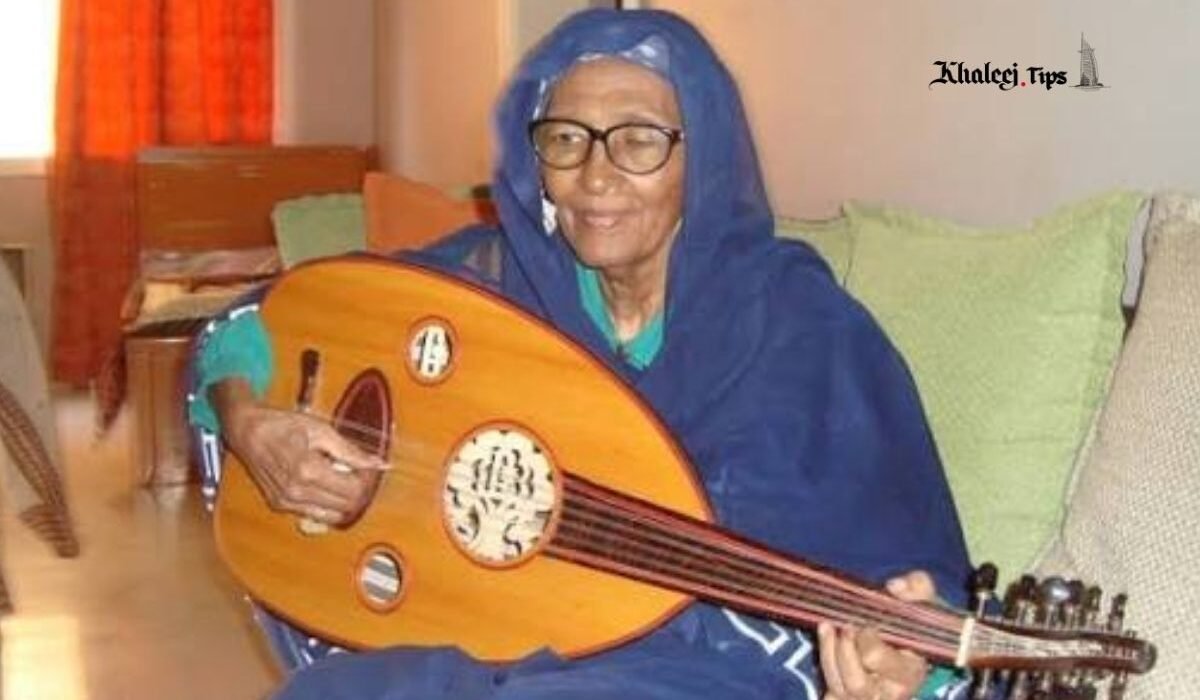
Imagine a little Sudanese girl growing up in the 1930s, tuned in to a radio and paying close attention to the occasionally static-filled music. There was a clear regulation in force at the time and location: a woman could sing, but she had to stay within her home and not participate in concerts, much alone write music.
That girl, however, continued to memorize music, listen to the radio, and become engrossed in rhythm in the same manner that most kids become engrossed in folktales. She went on to become one of the most radical figures in Sudanese music history. Her name was Asma Hamza.
However, when one tries to find information about this unique woman online, one will get a few conflicting facts and statements, which have a lack of evidence and are contradictory to each other. Here is an attempt to gather information, available in various sources, about Asma Hamza, her music, and achievements, specifying those facts that cannot be verified yet.
Asma Hamza was an oud player and a composer from Sudan, who built her career during the time when women could not compose music or even perform. Today she is famous for her pioneering role as one of the first women composers to emerge from Sudan and receive public recognition, including Google Doodle in her honor.
Who Was Asma Hamza?
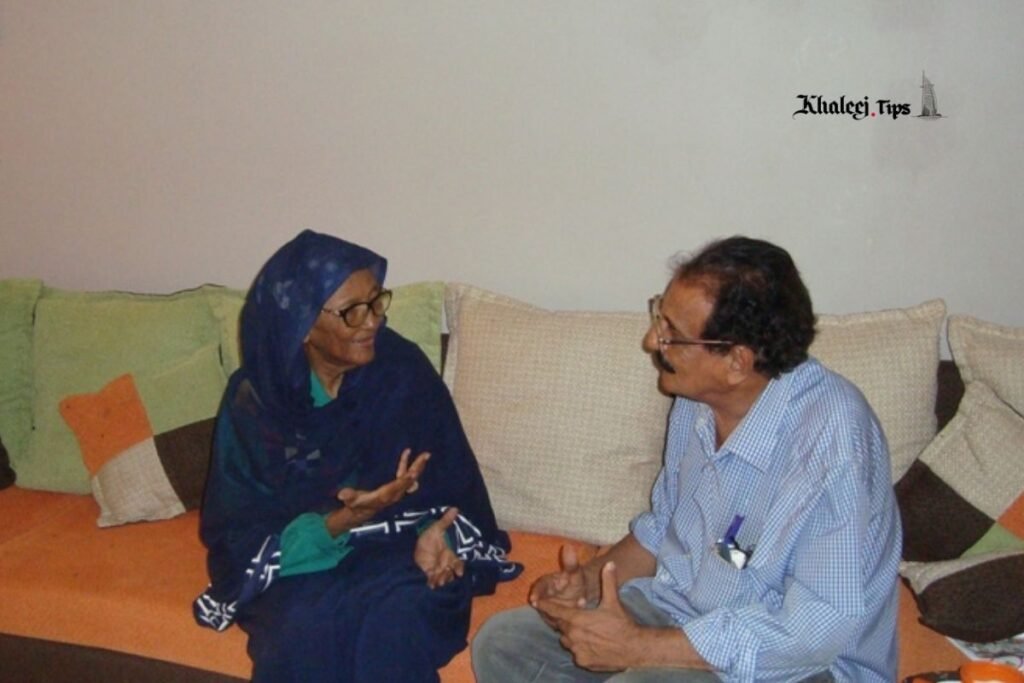
Asma Hamza was a Sudanese composer and oud player, born in 1932, recognized as one of the first women in Sudan — and among the earliest in the entire Arab world — to build a career composing music at a time when the field was completely closed to women.
Here are the key facts about Asma Hamza at a glance:
Born: 1932, Sudan
Birthplace: Sources differ on this fact. Some say she was born in Kassala, a cultural center in Eastern Sudan; others say she was born in the village of Halfaia Al-Malaki. As the sources seem unreliable regarding this particular piece of biographical information, it should be treated as unconfirmed until a more reliable source becomes available.
- Instrument: Oud, the pear-shaped stringed instrument, crucial in Arabic musical tradition
- Role: Composer and performer
- Significance: One of the first female composers in Sudan, a symbol of participation of women in Arab music
- Early Life and Childhood
Asma Hamza Quick Biography Overview
| Category | Details |
| Full Name | Asma Hamza Bashir |
| Known As | Asma Hamza |
| Birth Year | 1932 |
| Birthplace | Halfaia Al-Malaki, Sudan |
| Nationality | Sudanese |
| Profession | Music Composer, Oud Player |
| First Instrument | Oud |
| Musical Training | Self-taught |
| Career Start | Composed music secretly in early years |
| Breakthrough Moment | Won Laylat al-Qadr Al-Kubra (1997) |
| Famous Composition | Al Zaman Al-Tayb (1983) |
| Total Works | More than 90 musical compositions |
| Musical Style | Sudanese folk blended with Arabic classical |
| Major Challenge | Gender bias in male-dominated music field |
| Recognition | Google Doodle Tribute (2023) |
| Legacy | First female composer in Sudan, pioneer for women |
| Death | May 21, 2018 |
Family Background and Birthplace
Asma Hamza was an only child in her family, in the atmosphere where music was not a professional activity, but always surrounding her. It refers to the tradition of oral folklore, widespread among Sudanese people in the rural environment in those days.
There is much disagreement regarding the place of her birth. Some sources mention Kassala, the town known for its unique cultural influences located near Sudan’s eastern border. Others state that Asma Hamza was born in the village of Halfaia Al-Malaki. Neither of these claims seems to be confirmed in any reliable source, so this information is unverifiable.
What is clear, however, is the picture of the environment she was born in, in the 1930s and 40s. It was a conservative society where there were strict limits for the role of a girl limits that would have made her choice of career seem nearly unimaginable for most people.
First Encounters With Music
Long before Asma Hamza ever touched an instrument, she already knew music. Radio became her source of rhythm and melodies she used to spend hours listening and memorizing songs from the radio. Folk songs and poetry, omnipresent in her childhood environment, gave her a natural ability to understand the rhythm and structure of songs.
It was no kind of formal education in the traditional sense of the word. There were no classes, no sheets of music, no teachers guiding her hands. It was pure immersion into music the kind of accidental education one can receive if he or she wants to listen.
Musical Education Self-Taught and Self-Made
Discovering the Oud
Unlike the majority of professional musicians of her era, Asma Hamza was not formally educated. She was learning to play oud on her own, trying fingerings and phrasing through listening, instead of attending classes. Oud is a very challenging instrument to learn — the fretless neck requires a perfect pitch and learning it without formal education is an act of incredible persistence that characterized Asma Hamza throughout her life.
Education in music in those times in this region is frequently described as a very limited process with few opportunities for women to become professionals. For Asma Hamza, being a self-taught musician was not a matter of style, but a necessity.
From Aspiring Singer to Composer
As a child, Asma Hamza reportedly aspired to become a singer. However, somewhere along the way, she understood that her voice would not help her become one and instead of abandoning her passion, she directed her attention towards composing and performing music.
This small change turned out to be a defining moment in the history of Asma Hamza a composer is a much rarer occupation among women in those times compared to the performer.
Breaking Barriers Career and Social Resistance
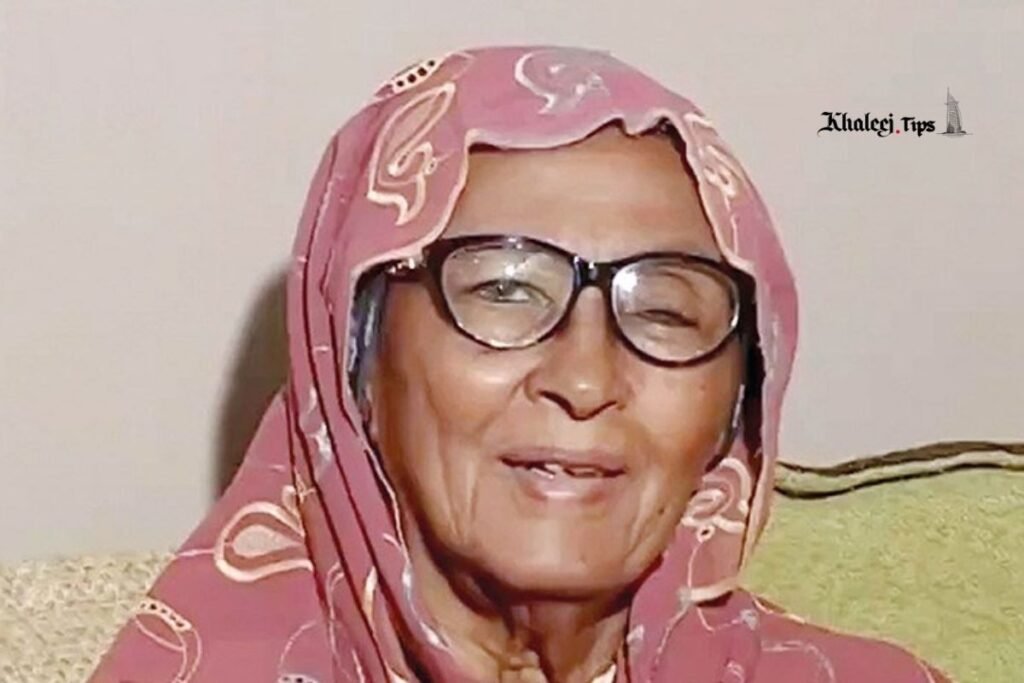
Entering a Male-Dominated Profession
Music composition in mid-20th century Sudan was, in effect, a profession for men only. The resistance Asma Hamza faced was not limited by informal social pressure — it went further, involving the cultural institutions of the time, which were organized in a way to provide no chances for a woman to be taken as a composer rather than performer or amateur.
However, she tried to enter this profession nonetheless, operating mostly outside the official network of musical recognition, developing her skills through practice.
Gaining Recognition
Recognition came gradually. As her compositions began to circulate and were performed, performers, singers and musicians took interest in her works slowly, but gradually, from the position of an outsider to the person, whose works interested other musicians.
In a situation like this, the only way to gain recognition was to be able to compose interesting music.
Notable Works and Style
The compositional style of Asma Hamza included elements of syncopated rhythms and a mix of Sudanese musical features with the Arabic lyrical tradition, a mix, which made her compositions uniquely hers, rooted in local culture, yet using regional musical language.
Some specific titles of compositions and names of collaborators of this era are poorly documented across various sources. Instead of repeating unconfirmed information, it should be mentioned that Asma Hamza’s full discography requires dedicated research, which could be based on Sudanese cultural institutions or interviewed witnesses of that era.
Key milestones in Asma Hamza’s career:
- Born in Sudan in 1932, in the household shaped by oral musical tradition
- Self-directed exposure to music via radio and oral folklore
- Self-taught mastering of oud, learned entirely by ear
- Change in focus from singing to composition and performing
- Gradual recognition among performers and singers as her compositions circulated
- Recent recognition in public sphere, including official cultural awards
- Legacy and Cultural Impact
Influence on Women in Arab Music
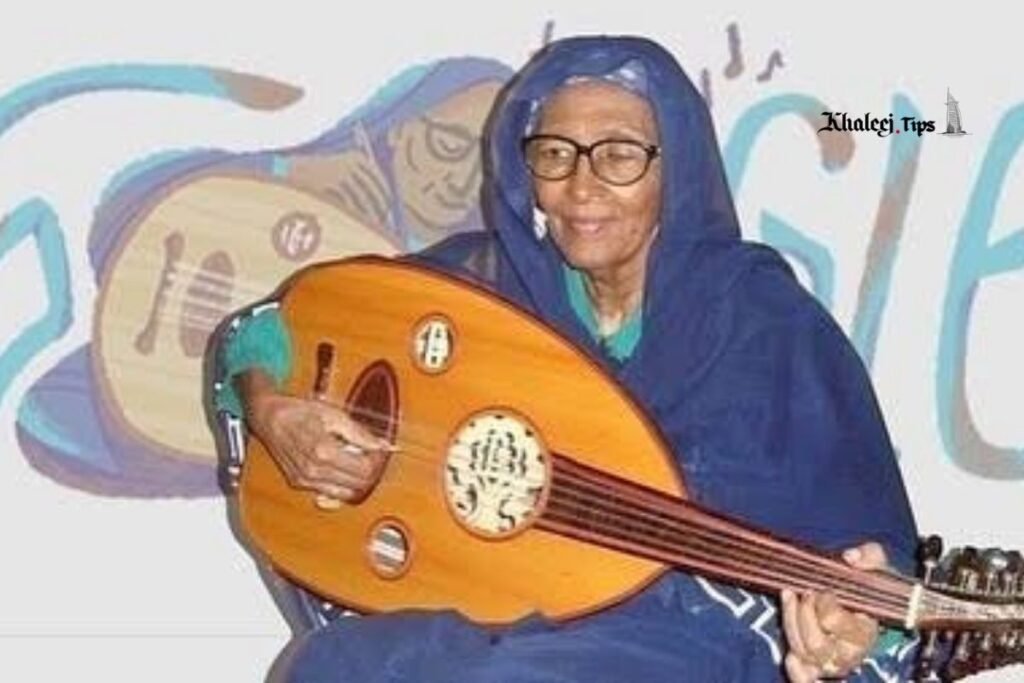
The career of Asma Hamza mattered not only for her music, but as a living example of what is possible the fact that the path is difficult is not a problem. Such a visibility can matter much more than any composition it opens the space for the next generation to imagine themselves in a role that they would not have thought about otherwise.
Her story is a part of a larger, underrepresented history of women in Arab music, struggling against numerous barriers and some of which have received public recognition in their lifetimes, and many have not.
| Composer | Country | Era | Known For |
| Asma Hamza | Sudan | 1932–2018 | First female oud composer in Sudan, 90+ compositions |
| Fairuz | Lebanon | 1935–present | Voice of the Levant, pan-Arab icon |
| Warda Al-Jazairia | Algeria/Lebanon | 1939–2012 | “The Flower of Arabic Music” |
| Umm Kulthum | Egypt | 1898–1975 | Greatest Arab singer of the 20th century |
| Ahlam Al-Shamsi | UAE | 1969–present | Leading Emirati pop artist |
Recognition in Recent Years
After decades of relatively limited recognition, the story of Asma Hamza became a subject of interest in recent times especially in connection with a Google Doodle devoted to her contributions to Sudanese and Arab music. It means that there has been a renewed interest to her story, which can be seen in the growing number of searches about Asma Hamza biography in the Internet.
However, there is another, more practical aspect behind it. The revived interest in this story allows to gather more information about her and document her life while the records and witnesses of that time are available.
| Category | Details |
|---|---|
| Full Name | Asma Hamza Bashir |
| Born | 1932, Halfaia, Sudan |
| Family | Only child |
| Early Interest | Interested in music, played oud |
| Education | Self-taught, no formal music education |
| First Instrument | Oud (string instrument) |
| Career Start | Self-taught, started composing in secret |
| Breakthrough | Won Laylat al-Qadr Al-Kubra (1997) |
| Key Work | Composed ‘Al Zaman Al-Tayb’ (1983) |
| Awards | Google Doodle tribute (2023) |
| Challenges | Fought gender bias, music in secrecy |
| Legacy | Pioneer for women in Arab music, inspired generations |
Why Asma Hamza’s Story Still Matters Today
If we disregard the specifics of the instrument and epoch, Asma Hamza’s story is about someone who refused to recognize the barriers she encountered. She did not seek to become a symbol of breaking barriers; she simply wanted to compose music and perform it the best way she could, without formal education, without recognition and without any permission.
This is the aspect that allows her story to become relevant decades after her death. It is not just a footnote in music history it is a reminder that the cultural progress often begins with someone who just does the forbidden things, and does them well enough to notice.
FAQ
Who was Asma Hamza?
Asma Hamza was an oud player and a composer from Sudan, recognized as one of the first female composers in Sudan and one of the pioneers in Arab music. She created her career in the epoch when music composition was considered an exclusively male occupation, opening the doors to other women composers.
When and where was Asma Hamza born?
She was born in 1932 in Sudan. The information about her birthplace is contradictory in different sources — some say that she was born in Kassala, others in the village of Halfaia Al-Malaki. This information should be considered unconfirmed until a more reliable source appears.
Did Asma Hamza have formal music education?
No. Asma Hamza was a self-taught musician. She mastered the oud by ear through listening and memorizing, having no access to formal lessons or structured education in music a common problem for women in her place and time.
What instrument was Asma Hamza known for playing?
She was famous for playing oud the fretless, pear-shaped stringed instrument that is central in traditional Arabic music.
Why is Asma Hamza being recognized recently, including with a Google Doodle?
Recent recognition, including a Google Doodle devoted to her, reflects the renewed interest to her role as one of the barrier-breaking composers in Sudanese and Arab music.
Conclusion
The journey of Asma Hamza from a self-taught young girl listening to the radio in 1930s Sudan to a composer who changed the perception of women in Arab music is the story of a persistent person who had no formal education, no formal recognition, and lots of resistance to overcome but managed to build her musical legacy despite all this.
Her recent recognition is an example of how cultural history can be written and rewritten many decades after the actual event. If this story touched you, please explore other pioneering women in Arab and Sudanese cultures.
You Can Also Read This: Ramneek Sidhu Biography